

Hull Pro in Saltwater — Performance Gains with Smart Maintenance.
Hull Pro works in saltwater — but it's not a set-and-forget solution. The boaters who get the best results stay ahead of growth. Here's exactly what to expect, and how to make it work for your vessel.
What to expect
Hull Pro in Saltwater — The Honest Summary.
Marine growth still occurs
Hull Pro is not an antifouling paint. It creates a smooth, non-porous surface that makes growth significantly easier to remove. Growth will still occur in warm saltwater, especially in high-growth regions.
Routine cleaning is required
In high-growth saltwater areas, cleaning may be needed every 1–4 weeks. Hull Pro's smooth surface means growth releases faster and easier — dives are quicker, and haul-out resets are straightforward.
The payoff is real
For boaters who stay on top of it — up to 20% fuel savings, up to 15% speed increase, no recoating every season, no biocides in the water, and a hull that holds its resale value season after season.
Is Hull Pro right for you?
We'd rather lose a sale than have an unhappy customer.
✓ Hull Pro is a great fit if...
Your vessel is lift-kept or trailer-kept — even in saltwater, you get the best of both worlds.
Your vessel is in the water for a month at a time. If maintained correctly by a Hull Pro-experienced diver, you prevent compounded growth build-up.
You're a charter captain or commercial operator with a crew that handles regular maintenance.
You're a motivated boat owner who uses the vessel regularly and stays ahead of growth.
You care about performance, fuel savings, and resale value and want a biocide-free option.
You use a professional diver or detailer for seasonal hull maintenance.
✗ Hull Pro may not be the right fit if...
Your vessel lives in the water full time in a high-growth saltwater region and you won't be cleaning it regularly.
You're a full-time liveaboard in a warm, high-fouling saltwater marina with no access to regular dive service.
You want a completely zero-maintenance hull solution — that product doesn't exist in saltwater, and anyone telling you otherwise isn't being straight with you.
You're in South Florida waters with extreme growth rates and your vessel sits in the water year-round with no maintenance plan — antifouling paint is genuinely the better fit.
"Not sure if Hull Pro is right for your water and setup? Contact us before you buy. We'll give you a straight answer — even if that means pointing you toward a different solution."
How it works
Hull Pro is not antifouling. Here's what that means for saltwater.
Traditional antifouling paints use copper-based biocides to kill marine growth. Hull Pro takes a completely different approach. Our ceramicized epoxy formula creates a smooth, non-porous surface that reduces drag and makes it significantly easier to remove marine buildup without introducing toxic chemicals into the water.
In saltwater, growth will still occur — it just won't anchor as aggressively as it would on bare gelcoat or metal. When you clean a Hull Pro-coated hull, growth releases faster with less effort. Divers spend less time. Haul-outs are cleaner. And the hull comes back to full performance after every reset.
The ceramicized epoxy is also durable enough to handle acid-based hull cleaners like On & Off Hull Cleaner for tougher spots without delaminating or degrading the coating. And because it's non-sacrificial, there's no recoating every season. One application protects your hull for multiple seasons.
Why saltwater boaters choose Hull Pro
Up to 20% fuel savings
A smooth hull reduces drag — engines work less hard at the same speed.
Up to 15% speed increase
Reduced friction translates directly to faster hole shots and higher top speeds.
No recoating every season
Hull Pro is non-sacrificial. One application protects for multiple seasons.
85% UV resistance
Hull won't yellow on lift or dry rack storage — resale value stays protected.
Gelcoat: blister and osmosis protection
Hull Pro's ceramicized epoxy bonds to gelcoat and creates a barrier against water intrusion — protecting against blistering and osmotic damage on fiberglass hulls.
Oxidation protection for gelcoat and metal
Hull Pro's ceramicized epoxy keeps fiberglass hulls from fading and chalking, and aluminum pontoon and tritoon tubes from pitting and surface degradation season after season.
Trailer and lift safe
Hard epoxy formula — won't slip off bunks or straps. Power wash and acid wash resets the coating without degradation.
100% biocide-free
No copper, no toxic chemicals leaching into the water around your vessel.
Real world results
2 Years with Hull Pro in Saltwater — Capt. Mike, FSFTV
Captain Mike from Florida Sport Fishing TV shares his honest, real-world experience with Hull Pro on his SeaHunter 41 CTS after nearly 2.5 years of offshore saltwater use.
Maintenance guide
How to keep your Hull Pro-coated hull in top shape in saltwater.
Staying ahead of growth is the key. Growth is much easier to remove when it's soft — before barnacles or hard fouling have time to mature.
Routine maintenance — in water
Take her out and open it up
Running at speed once a week blasts off soft fouling before it hardens. This simple step makes dive cleanings significantly easier.
Dive cleaning — right tools matter
Microfiber cloth for light slime. 3M white scouring pad for moderate fouling. White plastic scraper for tougher spots. Never use metal brushes — they damage the coating.
Find your cleaning schedule
Cleaning schedules change with each season and vary region to region. If you have a regular diver cleaning your hull, have them monitor growth and create a schedule they're comfortable with. The diver needs to understand the full bottom must be padded down — this is not standard ablative paint that can just be scraped and left.
Haul-out reset cleaning
Pressure wash first
Gas-powered pressure washer at max 4,500 PSI removes soft growth quickly and efficiently. This is the fastest way to reset the hull.
Light scrubbing if needed
A 3M white scouring pad lifts any remaining buildup after pressure washing. Always use white pads — not metal or abrasive materials.
Acid wash for stubborn growth
Hull Pro handles acid-based cleaners like On & Off Hull Cleaner without delaminating. Acid wash resets the coating completely — no degradation, no recoating needed.
Pro tip: Reset cleaning is much easier if routine cleanings have been maintained throughout the season. Stay ahead of it — the coating rewards you for it.
Full Protocol — Divers & Installers
Hull Cleaning & Hull Diver Instructions
Step-by-step diver instructions, pull-and-reset checklist, tool recommendations, frequency guidance, and a downloadable diver reference card — everything needed to maintain Hull Pro correctly and keep your warranty intact.
How long does it last
No coating lasts forever. Hull Pro included. Here is what the field data shows.
Field use in saltwater shows 5+ years of solid protection without reapplication for well-maintained, lift-kept and trailer-kept vessels. Full-time saltwater vessels with regular maintenance see similar results. The more consistently you clean, the longer the coating performs.
When Hull Pro does start to wear, you will see it coming. It is a gradual fade, not a sudden failure. Chalking, loss of beading, biofouling creeping back in areas that stayed clean for years — these are the early signals. You will know it is time before it is actually a problem.
When you hit that 5-year mark, give the hull a good look and go from there. There is no clock forcing a reapplication — just watch for the signs.
Longevity in saltwater is directly tied to maintenance. Boats that are cleaned regularly consistently outperform those that are not — sometimes by years. The coating rewards the effort you put in.
Signs Hull Pro is approaching end of protection life
Loss of gloss or sheen — dullness is often the first indicator of UV degradation
Chalking — a powdery surface residue that wipes off. Classic sign of UV-broken resin
Visible micro-cracking or checking on the surface film
Surface feels rough or porous where it was once smooth — coating is losing film integrity
Biofouling re-establishing faster than it used to — protection is thinning
Water no longer beads on the hull surface — hydrophobic properties are degrading
Increased drag sensation — engines working harder at the same speed
Fouling patterns returning in areas that stayed clean for years
Seeing these signs on your hull?
Contact us to assess your coating →From the project gallery
See it in action — a real saltwater install.
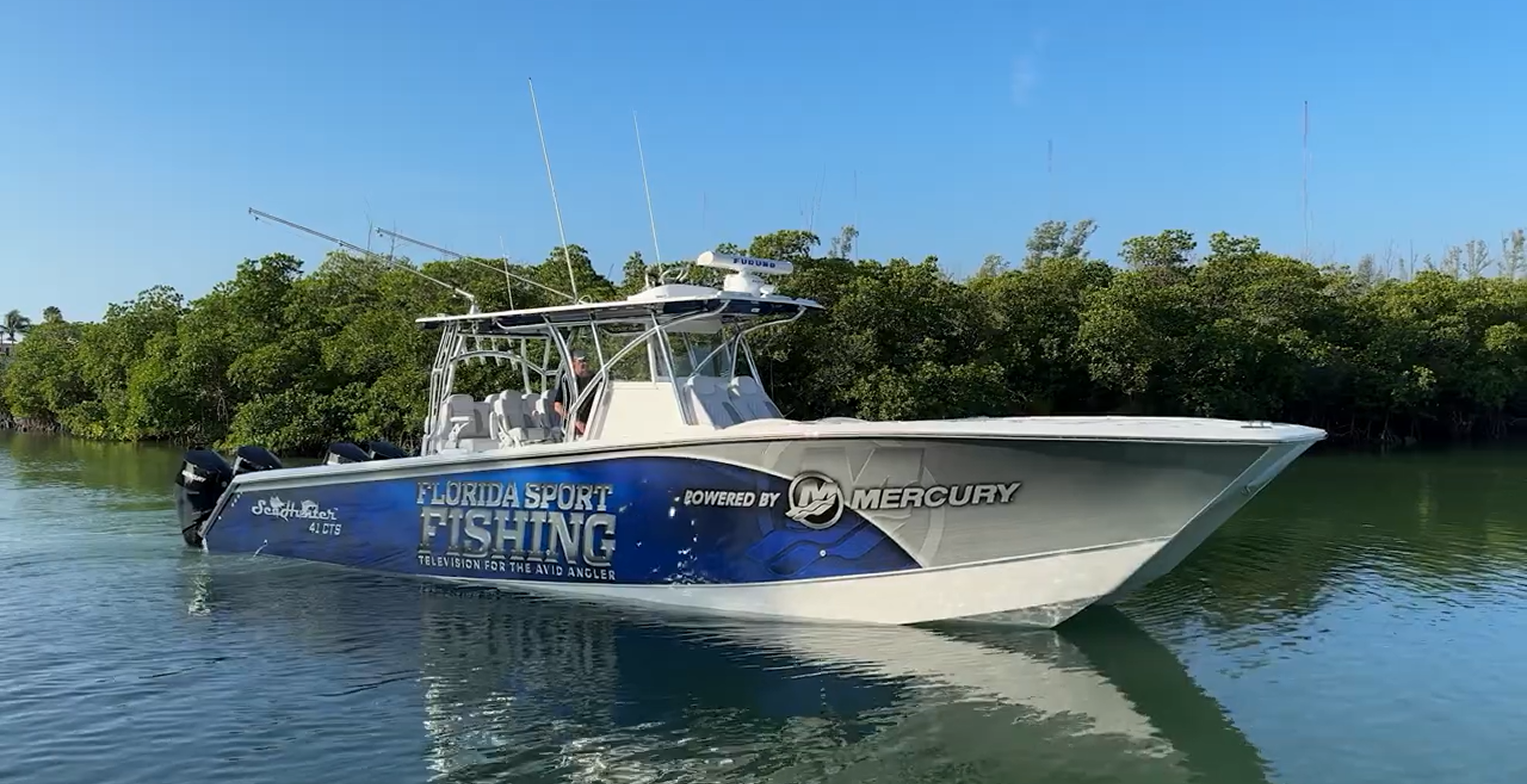 Offshore · Saltwater
SeaHunter 41 CTS
2.5 years in saltwater — still performing. Real-world fuel savings, speed gains, and easier hull cleaning from one of Florida's most trusted offshore captains.
Read the full project →I take a plastic scraper, go over it, wipe the hull down — and it looks brand new when I'm done. This stuff cleans up extremely well.
Chris — Professional Hull Diver
Ready to protect your hull?
Not sure if Hull Pro is the right fit for your saltwater setup? Contact us before you buy — we'll give you a straight answer.